Monday, May 15, 2017

Keep the house clean. Most Beautiful dog, Yes


Where is that rodent? I'll get it for sure, kitchen, granaries, stables. Get the rodents out. 

And you there, if you behave like a rodent, you are a rodent, must be, so be aware do not come onto our property. I'll get you.

Been here since 1600. Vote for me, will you...

Okay, there has been a mistake. I am NOT, let me repeat, NOT a monkey.

You see. I said so


See, here again

Well, maybe a little bit


But, I do not have a mustache, period!

No way, that's a mustache

And, that and that


Just vote for me okay, just vote before ..... Oh,now I see, you are a rodent, aren't you? I knew it, I knew it


Oh, humans like me a lot, just listen to what they said about me. 


General Appearance
The Affenpinscher is a balanced little wiry haired-like toy dog whose
intelligence and demeanour makes it a good house pet. Originating in
Germany, where the name Affenpinscher means “monkey-like terrier”,
the breed was developed to rid the kitchens, granaries and stables of
rodents. In France the breed is described as the “diablotin moustachu”
or the moustached little devil. Both these names help to describe the
appearance and attitude of this delightful breed. When evaluating the
breed, the total overall appearance of the Affenpinscher is more
important than any individual characteristic.

Temperament
The general demeanour of the Affenpinscher is game, alert and inquisitive
with great loyalty and affection toward its master and friends. The breed
is generally quiet but can become vehemently excited when threatened
or attacked and is fearless toward any aggressor.

Substance, Size Proportion
The Affenpinscher is a sturdy, compact little dog with medium bone and
is not delicate in any way. The height at the withers is between 9 inches
and 11-1/2 inches, with 10-1/4 inches being the ideal. The height at the
withers is approximately the same as the length of the body from the
point of the shoulder to the point of the buttocks giving a square
appearance. The female may be slightly longer.

Head
The head is in proportion to the body, carried confidently upright with a
monkey-like facial expression. Eyes: Full, round, dark, brilliant, and of
medium size in proportion to the head but not bulging or protruding.
The eye rims are black. Ears: Either cropped to a point, set high and
standing erect, or natural, standing erect, semi-erect or dropped. All
types of ears, if symmetrical, are acceptable as long as the monkey-like
expression is maintained. 
Skull: Round and domed but not coarse. 
Stop: Well defined. 
Muzzle: Short and narrowing slightly to a blunt nose. The
length of the muzzle is approximately the same as the distance between
the eyes. 
Nose: Not obviously turned up or down, with black pigmentation.

Lips: Black in color with the lower lip more prominent. 

Bite:Undershot with the lower teeth closing closely in front of the upper
teeth. A level bite is acceptable if the monkey-like expression is
maintained. The teeth and tongue do not show when the mouth is
closed. The lower jaw is broad enough for the lower teeth to be straight
and even.

Neck, Topline and Body
Neck: Short and straight with upright carriage. 
Topline: Straight and level. 
Body: The chest is rather broad and deep; the ribs are moderately
sprung. The underline is slightly tucked up at the loin. The back is short
and straight. The loin is short and only slightly tucked. The croup has just
a perceptible curve before the tail. The tail is either docked or left
natural. When docked the tail is generally between 1 inch and 3 inches
long; set high and carried erect. When natural the tail is carried curved
gently up over the back while moving. The type of tail is not a major
consideration.

Forequarters
The front angulation is moderate. 
Shoulders:With moderate layback and
flexible enough to allow free front action. The lengths of the upper arm
and the forearm are about equal. 
Elbows: Close to the body. Front Legs:
Straight when viewed from the front. Front Pasterns: Relatively short
and straight. 
Dewclaws: Generally removed. 
Feet: Small, round and
compact with black pads and nails.

Hindquarters
The rear angulation is moderate. 
Hind Legs: Straight when viewed from
behind. When viewed from the side they are set under the body to maintain
a square appearance. The lengths of the upper thigh and the second
thigh are about equal. 
Stifle: Moderate angulation. 
Hock Joint:Moderate angulation; straight when viewed from behind. Rear Pasterns:
Short and straight. 
Dewclaws: Generally removed. Feet: Small, round
and compact with black pads and nails.

Coat
The hair is dense, rough, harsh textured and approximately 1 inch in
length on the shoulders, body and back, but may be shorter on the rear
and tail in contrast to the longer, shaggier and less harsh hair on the head,
neck, chest, stomach and legs. At maturity the neck and chest coat may
grow longer to form a cape. The longer hair on the head, eyebrows and
beard stands off and frames the face to emphasize the monkey-like
expression. The hair on the ears is usually cut very short. The correct coat
needs little grooming to blend the shorter hair into the longer hair to
maintain a neat but shaggy appearance.


Color
Black, grey, silver, or black and tan - with symmetrical markings, or red
varying from a brownish red to an orangey tan. Some blacks may have a
rusty cast or have white or silver hairs mixed in the coat and furnishings.
Some reds have black, brown, and/or white hairs mixed in the coat with
tan furnishings. With the various colors, the furnishings may be a bit
lighter and some may have black masks. A small white spot or fine line
of white hairs on the chest is not penalized, but large white patches are
undesirable. Color is not a major consideration.

Gait
The Affenpinscher has a light, sound, balanced, confident gait and tends
to carry itself with comic seriousness. When viewed from the front or rear
while walking, the legs move parallel to each other. While trotting, the
feet will converge toward a midline depending on the speed.

Wednesday, December 9, 2015

Remember Your War Heroes. That's why I'm the most beautiful dog.


I'm the biggest, the king of terriers, yes, I am.


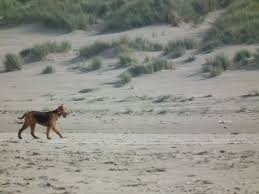
We Airedales use hounds to sniff out and pursue the quarry, then we come in, go in a tight, dark underground den without the help of human handlers, and make the kill. Of course, bringing back the game to my beloved poacher.

Yes, I am the common mans choice of sporting dog. So, whaaaat, hey, I've also brought messages to soldiers behind enemy lines.


Oh, war-stories I can tell you, Jack ones was sent out, run half a mile right through enemy fire, broken jaw, one leg splintered, delivered message and dropped dead on the spot. Yeah, those were the days...


Okay, okay, even better, I FOUND wounded soldiers on the battlefield. Wolf and Prince started doing that already in 1916.

Oh, before I forget, I do police work, didn't know that didn't you, eh, eh.
So, vote for me, now!

I'm intelligent, have good scenting abilities and, and our wiry coats are easy to maintain. For sure, that's what the folk say about us...

Listen, humans say a lot of things and you might want to read some more about us truly amazing breed.

Okay, okay, don't twist my paw, one more fact. We served in the Red Army in the early 1920s. So, even russians are convinced of our qualities.

Okay, okay, just one more fact. We lost two of our friends on the.....Titanic.

Yes, yes, the last one, I promise. I, Lady Boy, was the first celebrity white house pet, who else. President Harding even had a special chair hand carved for me to sit on at very important Cabinet meetings. Impressed. Now, soldier, vote for your country, thus, vote for me, period.

Size
Dogs should measure approximately 23 inches (58 cm) in height at the shoulder; bitches, slightly less. Both sexes should be sturdy, well-muscled and well-boned.

Coat and Colour 
Coat should be hard, dense and wiry, lying straight and close, covering the dog well over the body and legs. Some of the hardest are crinkling or just slightly waved. At the base of the hard, very stiff hair should be a shorter growth of softer hair termed the undercoat. The head and ears should be tan, the ears being of a darker shade than the rest. Dark markings on either side of the skull are permissible.

The legs up to the thighs and elbows and the underpart of the body and chest are also tan and the tan frequently runs into the shoulder. The sides and upper parts of the body should be black or dark grizzle. A red mixture is often found in the black and is not to be considered objectionable. A small white blaze on the chest is a characteristic of certain strains of the breed.

Head 
Should be well balanced with little apparent difference between the length of skull and foreface. Skull should be long and flat, not too broad between the ears, and narrowing very slightly to the eyes. Scalp should be free from wrinkles, stop hardly visible, and cheeks level and free from fullness. Muzzle should be deep, powerful, strong, and muscular. Should be well filled up before the eyes. Nose should be black and not too small. Mouth: Lips should be tight. Teeth should be strong and white, free from discolouration or defect. Bite either level or vise-like. A slightly overlapping or scissors bite is permissible without preference. Eyes should be dark, small, not prominent, full of terrier expression, keenness and intelligence. Ears should be V-shaped with carriage rather to the side of the head, not pointing to the eyes, small, but not out of proportion to the size of the dog. The topline of the folded ear should be above the level of the skull.

Neck 
Should be of moderate length and thickness, gradually widening towards the shoulder. Skin tight, not loose.

Forequarters 
Shoulders long and sloping well into the back. Shoulder blades flat. Forelegs should be perfectly straight, with plenty of muscle and bone. Elbows should be perpendicular to the body, working free of sides.

Body 
Back should be short, strong and level. From the front, chest deep but not broad. The depth of the chest should be approximately on a level with the elbows. Ribs well sprung. Loins muscular and of good width. There should be but little space between the last rib and the hip joint.

Hindquarters
Should be strong and muscular with no droop. Thighs should be long and powerful with muscular second thigh, stifles well bent, not turned either in or out, hocks well let down, parallel with each other when viewed from behind. Feet should be small, round, and compact with a good depth of pad, well cushioned; the toes moderately arched, not turned either in or out.

Tail
The root of the tail should be set well up on the back. It should be carried gaily and be of good strength and substance.

Gait 
Movement or action is the crucial test of conformation. Movement should be free. As seen from the front the forelegs should swing perpendicular from the body free from the sides, the feet the same distance apart as the elbows. As seen from the rear the hind legs should be parallel with each other, neither too close nor too far apart, but so placed as to give a strong, well-balanced stance and movement. The toes should not be turned either in or out.

Faults 
Yellow eyes, hound ears, white feet, soft coat, being much over or under the size limit, being undershot or overshot, having poor movement, are faults which should be severely penalized.

The use of any and all foreign agents for the improvement of dogs in the show ring, such as colouring, dilating the pupil, and stiffening the coat, is forbidden. Such acts are unsportsmanlike and unfair to those exhibitors who live up to the rules.

Scale of Points 
Head......................................................................................... 10
Neck, shoulders and chest....................................................... 10
Body.......................................................................................... 10
Hindquarters and tail............................................................... 10
Legs and feet............................................................................ 10
Coat.......................................................................................... 10
Colour......................................................................................... 5
Size........................................................................................... 10
Movement................................................................................. 10
General characteristics and expression.................................... 15
TOTAL 100


Okay, okay, one more fact:
I LOVE OTTERS,
just love them to death...

Monday, October 19, 2015

Tip 5: Stop your barking dog and seek professional help:


The day you buy your dog, it brings the responsibility and commitment to meet the needs of that dog. Ensuring that your dog stops barking, and making sure you get help if your dog has a behavior problem associated with the bark.

You do this by calling a dog whisperer, dog behaviorist or dog trainer. This will guide you in finding a suitable solution for you and your dog, taking into account the opportunities that are available.

Yes, yes, I hear you, you do not have to tell me, "Grandpa, stop complaining" ... so I'll give you an extra tip. A tip from the secret box of a dog whisperer.

As a dog whisperer it is not always easy to find a solution that takes into account the character of the dog. And yet I feel this is just the challenge that makes my job so exciting.
Get Help


Moreover, the curiosity always excites in me when I get called.

Therefore, a secret trick you can give you back the pride of owning a your pup.

Just one example, and no, no more stories that could have possibly happened. This really happened and I am proud that I was able to solve it so plain and simple.

You may have already read on the website that Jenn came to us from Spain. Well, Jenn was completely down. She had totally lost confidence. So every wrong action, how can I explain it ... could mean the end of the sparkle of the bond we were creating.

My girlfriend and I have a habit of sometimes going out. Yes, who does not. But every time we got home, Jenn was barking at the door.

Okay, admittedly, handy if there are intruders, but less useful for the neighbors.


Knowing Right, the moment when I take control of this situation and I learn Jenn clearly, precisely and exactly the behavior I expected from her.

Hmm, sounds familiar, not?
Ask a pro
Ask A pro

Here it comes, the secret ... The secret that I myself have experienced training with INTERNATIONAL MAJOR TOP TRAINERS that compete every year at Crufts for obedience, agility and doggy-dance walk, but also manage to win every year and this already for more than a decade.

It took me exactly one week to stop Jenn barking. And I know you'll read the following paragraphs, perhaps a few times because it lies in the details of the technique. But you asked me to give tips and this is a tip where I as a dog whisperer earn money. And believe me, it comes to sensitively, precisely orchestrated solutions, I am worth more than every penny.

For this solution, you'll need 4 things: sweets (to maintain the focus of the dog, no, not as a reward - perhaps in a later article for details), a toy that your dog loves it (Jenn + ball = love) perseverance and a lot of patience.

I learned Jenn barking on command. In other words, I say, "barking" and Jenn barks. If she does that properly, I give her a piece of candy. So, she knows that her focus is correct. After a number of times practicing properly, Jenn gets her reward. We play with the bal.This took five days.Then I was sure I could say always and everywhere, "barking" and Jenn started barking.

Knowing Right, Jenn now know in what situation she's expected to barking. First part success.

Now, just unlearn when no longer to bark. And this I have done on a quiet weekday ... I came home in the car, went to the front door ... and Jenn started barking.

She continues to bark when I came in. I waited patiently without making eye contact, even without giving her any attention until she stopped barking.

At the time she relaxes completely, I give her the command "bark", Jenn barks, I give the candy. This command I repeat two times. After that I played with her as a reward.

Now I go out, drove the same car away, came back and repeated the scenario ... Jenn barks relaxes command, sweet, command, sweet, command, sweet, just play ...

So I drove away 12 times, so I came back 12 times ...

Only the 12e time Jenn barked NO MORE. She was already relaxed when I came through the door. I gave the command, sweet, command, sweet, command, sweet, just play ...

Ask A pro
Ask a pro


Ha, ha, won. Of course I can talk about this solution for a long time with many veterinarians and dog behavior psychologists ... It works, period (and I know why it works). And the solution comes from international dog trainers, competing all over the world.

There are incredible and amazing dog-secrets only known by actual dog whisperers because they for decades they intensively and passionately work  every day work with dogs, discovering by chance secrets. And these secrets they just give to the next generation of top trainers and dog whisperers.

And that's why it pays to turn to a dog whisperer to find Knowing Right-solutions for barking dogs.

Have confidence, create a powerful bond with your dog

Bryan

PS If you still want more information about North Vancouver Knowing Right Dog Psychology Center, click here.

http://www.knowingrightdingo.com/#!knowing-right-dog-psychology-center/cg0g

Tip 4: Stop the barking dog, challenge him mentally and physically:

Get Help
Excessive barking is usually the result of pent-up energy. If this is so, then the solution is simple: make sure the dog uses that energy in a more productive way.

Hey, do you walk your dog daily? Or, do you let him fetch a ball? Barking

while you play with your dog is quite ok, enjoy it.

For the more energetic dogs, and this is so with my dogs, there are still major challenges out their. Mentally fun for your dog!

Daphne, our bearded collie and Jenn, our ... well she's not a purebred dog, I train daily to participate in obedience competitions.

Fun is the key word. I enjoy every activity with my dogs every day. It's bonding while mentally and physically challenging them.

Because, when difficult situations occur, the strength of the bond you have with your dog will make him trusts and follow you completely. Knowing Right!

Have confidence, create a powerful bond with your dog

Bryan

PS If you still want more information about North Vancouver Knowing Right Dog Psychology Center, click here.


Tip 3: How to ask your dog to stop barking:


If your dog continues to bark over again and again; same toy, person, situation, or place? Then you have to make yourself powerful, and claim that incentive as your own. In other words, you have the right to bark and you deprive your dog this barking right.

Use your body language, your mind, and your calm-assertive energy as it were, creating an invisible wall that your dog cannot cross. Do this with 100% dedication and focus, and the result might perhaps surprise you.

This solution is a little difficult for someone who has already a barking dog. But it is the one I use as a dog whisperer, dog behaviorist, to prevail with dogs that are out of order.

Let me coach you through the steps. My girlfriend who primarily gives training to people explained to me how I actually did this. Because, I did it, I just did not know how exactly I had explain the simple steps.

Until one night we sat down to talk about a coaching I did that day and she told me: "Oh, that reminds me ... so that's the way you do it probably?" Well, not completely, but her answer gave me clear enough insight to determine for myself precisely what I did and how I did it. So, now I can explain it to you exactly.

An example: explaining the situation as concrete as possible. Even though this is a fictional example. Well, fictional, let me tell you that this situation already frequently occurred. But because I don't want anyone out there on this earth claiming I am talking about his or her dog ... thus as fictitious and concrete as possible.

Imagine, the postman comes every day around 9 am. Max, the barking dog, enjoy this moment. As every summer day, he runs, barking, through the open porch door to the garden-gate that is closed.
Look for help
 Louis, our mailman, has known Max now for years and therefore knows what's up. So, Louis, trying to maintain the neighborhood peace as much as possible, has developed his own strategy for Max. Because, after all, not all neighbors liked that dog barking.

So, Louis, assessing the situation long before, had the letters and the newspaper already taken in his left hand. He comes with his squeaky bike driving around the corner. Right, the squeak of the bike is the trigger Max was waiting for ... so he runs barking through the porch door,...

Louis, brakes with his right hand, jumps off, then opens the mailbox with his right hand, passing on the letters and the newspaper from his left hand to his right hand, quickly throwing the mail in our mailbox.

Louis hops back on his bike, start pedaling like crazy, at the precise moment barking Max ends up with his snout between the bars of the gate.
Get Help by a pro


Max barks like crazy, Louis flees. Max continues for minutes as a wild boar.

Max won once again. A potential intruder chased away. And this has been going on for two months.

Recapitulate: Max wants to do the right thing, Louis wants to do the right thing. The situation is getting worse every day!

Knowing Right, the moment when I take control of this situation and I teach Max clearly, precisely and exactly the behavior I expect of him.

And how to do this yourself at home is exactly what I'm going to explain to you... Knowing Right.

The next morning, I make for sure, at 9 am I'm already near the gates, just weeding. Actually keeping myself occupy until Louis comes along. And this is important because this is step one in the process! I am NOT waiting for the postman, I'm just working in the garden.

The moment the squeaky bicycle comes towards our house and Max hurries barking towards fences, I step with determination up to the gate.

In other words, I'm the first at the garden gates, before Louis and before Max. This is step two.

I lean against the fences, looking right in the direction of Max and draw an imaginary line on the ground about half a meter from me. This is the line Max cannot cross. This is step three.

I close my eyes, relax completely and see in my imagination how Max just before the imaginary line behaves and relaxes. This is step 4.

I open my eyes, say hello to Louis and turn resolutely to the upcoming Max: "sit," I say with a calm, loud and firm voice. I imagine myself that Max will just do that. I keep repeating this command to calm until Max sits relaxed. That is until I see that Max's muscles are relaxed!

Listen, I've got control, thus, if I say "sit" then that means, "sit",period. I give this command with 100% conviction and focus, and the result could be  surprising to you. This is step five.

The sixth and final step is very simple. I give Max the command that he can play in the garden. Only, I remain standing between Max and Louis. As a boss, I have the control here. And I'm greeting Louis from now on, not Max.

If you have practiced this for a few days you will experience, you've probably have some time to chat with the mailman about the weather. Just let the postman pace the letters and the newspaper in the mailbox. Explain the postman you also want Max to stop barking and that you have taken control over Max's situation.

You'll be amazed how quickly Mag settles down and you will be amazed how relaxed Louis brings the post.


Have confidence, create a powerful bond with your dog

Bryan

PS If you still want more information about North Vancouver Knowing Right Dog Psychology Center, click here.


Go To Tip 4


Tip 2: Stay calm when you correct your barking dog:

http://www.knowingrightdingo.com/#!knowing-right-dog-psychology-center/cg0g

Consistently barking dogs can be quite irritating. So if your dog barks, I can imagine that you, yourself, are quite frustrated. Certainly, if the barking bothers you in the activity you are doing at that moment. Or should I say, were doing, because your concentration is already gone, isn't it?

Okay, so frustration peaks. And with this energy boost in your body, you're going to exhort the barking dog to be quiet. In summary, you, a bundle of energy; your barking dog, another barrel full of energy ...

http://www.knowingrightdingo.com/#!knowing-right-dog-psychology-center/cg0g
 You guessed it. Your dog sees you coming. You call, he thinks ... Oh, boss comes playing. It turns out for him, you also have more than enough energy running through veins from your frustration and anger. The following will occur:

A Hunting Ritual:  The One With Most Energy (you) Encourages The Pack (your barking dog so) To Go For A Hunt And..

And that is just what your dog does, even more barking.

Without knowing, you've just triggered a basic instinct of dogs. Knowing Right, I'd say so. Know that your dog reflects your energy. Your frustration or anger = a lot of energy. So, your dog follows = he, a lot of energy.

Oh, the dog feels no frustration or no anger. No, he just feels that his energy-flow is somehow, how should I put it, blocked. So, he needs to release of that block.

And what does a dog with a lot of pent up energy. Right, making sure that this energy begins to flow again. How does he do that, yes indeed, by barking or biting.
http://www.knowingrightdingo.com/#!knowing-right-dog-psychology-center/cg0g


Now, the worst part of this story. I, Bryan, have known this all along and sometimes I still end up in exactly the same situation as some of my clients. But one is never too old to learn.

Therefore, if one of our dogs barks too much. I stop doing what I'm doing, give myself a minute or two (okay, sometimes three) to let my anger drain. Then go down as the epitome of calmness and apply tip one from a stable and safe feeling.

The feeling you have when addressing your barking dog, is decisive. Cool, right.

Really, I dig much deeper into the mirror-behavior of the dog. That's for another time. Unless of course you want to ask me a question. Then, I recommend, go to the contact page, and submit your question. I'll answer, for sure.


Have confidence, create a powerful bond with your dog

Bryan

PS If you still want more information about North Vancouver Knowing Right Dog Psychology Center, click here.

Get Help Here
Get Help Here
Go to Tip 3

Monday, October 12, 2015

5 Tips To Stop Dogs Barking For Good, Even The Neighbors Hound... Because you want to be a proud owner again...


Okay, barking dogs...well, it's a natural dog behavior. And let me create clarity here. So, if your dog is excited and barks, yes, quite possibly. Enjoy these moments, a few times a few minutes each day. Only, if your dog keep on barking, then you have a problem, a dog behavior problem.

Therefore, I give some tips you can already try out, including on the next door dog... and you try out the solutions sequentially. In other words, use tip one for at least a week, preferably slightly longer.

Sometimes it helps to repeat the tip for a few days to stop your dogs barks. Oh, and because repetition helps because your dog already has built up a habit to keep on barking ... and he obviously get benefit out of it ... otherwise he would have stopped a long time ago.

If it turns out that it does not work, then just get on with tip two, same routine, and then ... you got it?

If it turns, reading this text is too much trouble, go straight to tip 5 and read this tip to the end. Hell, reread this tip at least three times.

Because their I giving away what dog whisperers/dog behaviorists like myself use to assist clients, in 79% of cases with barking dogs, in a first consultation, that ACTUALLY helps owners to regain their pride IMMEDIATELY. No matter how helpless, insecure, frustrated and angry they might feel.


Ask a pro


TIP 1: Correct the behavior of your barking dog and  follow up:

Make it clear to your dog that he should stop barking. Use your gaze, body movement and a sound.

For example, my girlfriend used all three at once in this manner: she drew large round eyes, raised her right index finger in the air and said with a heavy, low bass voice, "What's up!" She had the allures of a kindergarten teacher from the '60s that corrects a four-year-old.

Just outlining the situation here, eh. You know what I mean, right? Perhaps you have your own way, so to speak, to be mad the dog ...

Only, beware. It is quite possible that the dog stops briefly and then starts again to bark. Logically, his body relaxed, but his brain was still alert.

Be patient. Repeat what you just did ... look, finger and voice ... give him some time to surrender completely. And only then go on with what you were doing before the barking began.


Go for Tip 2


Sunday, October 11, 2015

Feeling Down. Cuttle Me And I Love You Always. That's Why Im The Most Beautiful Dog Ever!


Jesus, don't shave me, please.
Visit Groomer

Call me a German Spitz, before immigrating to America. Now I perform in the circus. Anything to grab your attention.
Visit Groomer

Well, that's what's a companion's for. Making you laugh and giving you that fussy, warm and cosy feeling
Visit Stylist


Vote for me!
Visit Stylist

Adore my high intelligence and inquisitive nature, that's why I will love to "investigate". If I find something very interesting I will often want you, owner, or handler, to investigate as well, and will at times, not let the "matter" go until you comply.
Visit Groomer

I will often find the problem and call you. When it comes to children, for instance, if a baby or child is crying, I will want you to see what the problem is and will not stop "worrying" until you do.
Visit Stylist

I being so "tuned in". The one characteristics that makes me a desirable breed around children and elderly folks.
Visit Stylist


General Appearance
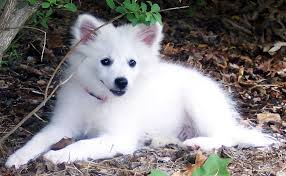
The American Eskimo Dog, a loving companion dog, presents a
picture of strength and agility, alertness and beauty. It is a small to
medium-size Nordic type dog, always white, or white with biscuit
cream. The American Eskimo Dog is compactly built and well
balanced, with good substance, and an alert smooth gait. The face is
Nordic type with erect triangular shaped ears and distinctive black
points (lips. nose. and eye rims). The white double coat consists of a
short, dense undercoat, with a longer guard hair growing through it
forming the outer coat, which is straight with no curl or wave. The
coat is thicker and longer around the neck and chest forming a lionlike
ruff, which is more noticeable on dogs than on bitches. The rump
and hind legs down to the hocks are also covered with thicker, longer
hair forming the characteristic breeches. The richly plumed tail is
carried loosely on the back.
Visit Groomer

Temperament
The American Eskimo Dog is intelligent, alert, and friendly, although
slightly conservative. It is never overly shy nor aggressive, and such
dogs are to be severely penalized in the show ring. At home it is an
excellent watchdog, sounding a warning bark to announce the arrival
of any stranger. It is protective of its home and family, although It
does not threaten to bite or attack people. The American Eskimo Dog
learns new tasks quickly and is eager to please.
Size, Proportion, Substance
Size: there are three separate size divisions of the American Eskimo
Dog (all measurements are heights at withers)
Toy: 9 inches (23 cm) to and including 12 inches (30.5 cm).
Miniature: over 12 inches (30.5 cm) to and including 15 inches (38 cm).
Standard: over 15 inches (38 cm) to and including 19 inches (48 cm).
There is no preference for size within each division.
Proportion: length of back from point of shoulder to point of
buttocks is slightly greater than height at withers, an approximate 1.1
to 1 ratio.
Visit Groomer

Substance
the American Eskimo Dog is strong and compactly built
with adequate bone.
Visit Groomer

Coat & Colour
Coat: the American Eskimo Dog has a stand-off, double coat consisting
of a dense undercoat and a longer coat of guard hair growing through it
to form the outer coat. It is straight with no curl or wave. There is a
pronounced ruff around the neck which is more noticeable on dogs than
bitches. Outer part of the ear should be well covered with short, smooth
hair, with longer tufts of hair growing in front of ear openings. Hair on
muzzle should be short and smooth. The backs of the front legs should
be well feathered, as are the rear legs down to the hock. The tail is
covered profusely with long hair. THERE IS TO BE NO TRIMMING
OF THE WHISKERS OR BODY COAT AND SUCH TRIMMING
WILL BE SEVERELY PENALIZED. The only permissible trimming
is to neaten the feet and the backs of the rear pasterns.
Color: pure white is the preferred color, although white with biscuit
cream is permissible. Presence of biscuit cream should not outweigh
consideration of type, structure, or temperament. The skin of the
American Eskimo Dog is pink -or gray.
Visit Groomer

Head
Expression is keen, intelligent, and alert. Eyes: are not fully round,
but slightly oval. They should be set well apart, and not slanted,
prominent or bulging. Tear stain, unless severe, is not to be faulted.
Presence of tear stain should not outweigh consideration of type,
structure, or temperament. Dark to medium brown is the preferred
eye color. Eye rims are black to dark brown. Eyelashes are white.
Ears: should conform to head size and be triangular, slightly blunttipped,
held erect, set on high yet well apart and blend softly with the
head. Skull: is slightly crowned and softly wedge-shaped, with widest
breadth between the ears. The stop is well defined, although not
abrupt. The muzzle is broad, with length not exceeding the length of
the skull although it may be slightly shorter. Nose pigment is black to
dark brown. Lips are thin and tight, black to dark brown in color. The
jaw should be strong with a full complement of close fitting teeth. The
bite is scissors, or pincer.
Visit Groomer

Neck
The neck is carried proudly erect, well set on medium in length and in
a strong, graceful arch.
Visit Stylist

Forequarters
Forequarters are well angulated. The shoulder is firmly set and has
adequate muscle but is not overdeveloped. The shoulder blades are
well laid back and slant 45° with the horizontal. At the point of
shoulder the shoulder blade forms an approximate right angle with the
upper arm. The legs are parallel and straight to the pasterns. The
pasterns are strong and flexible with a slant of about 20°: Length of
leg in proportion to the body. Dewclaws on the front legs may be
removed at the owner's discretion: if present, they are not to be
faulted. Feet are oval, compact, tightly knit and well padded with hair.
Toes are well arched. Pads are black to dark brown, tough and deeply
cushioned. Toenails are white.
Visit Groomer

Body
The topline is level. The body of the American Eskimo Dog is strong
and compact, but not cobby. The chest is deep and broad with wellsprung
ribs. Depth of chest extends approximately to point of elbows.
Slight tuck-up of belly just behind the ribs. The back is straight,
broad, level, and muscular. The loin is strong and well-muscled. The
American Eskimo Dog is neither too long nor too short coupled.
Visit Stylist

Hindquarters
Hindquarters are well angulated. The lay of the pelvis is
approximately 30° to the horizontal. The upper thighs are well
developed. Stifles are well bent. Hock joints are well let down and
firm. The rear pasterns are straight. Legs are parallel from the rear
and turn neither in nor out. Feet are as described for the front legs.
Dewclaws are not present on the hind legs.
Visit Groomer

Tail
The tail is set moderately high and reaches approximately to the point
of hock when down. It is carried loosely on the back, although it may
be dropped when at rest.
Visit Stylist

Gait
The American Eskimo Dog shall trot, not pace. The gait is agile, bold,
well balanced, and frictionless, with good forequarter reach and good
hindquarter drive. As speed increases, the American Eskimo Dog will
single track with the legs converging toward the center line of gravity
while the back remains firm, strong, and level.
Visit Groomer

Visit Stylist